Architect
James Braid
Established
1890
Par / Length
69 / 6557y
Access
Public
Green Fee
$$
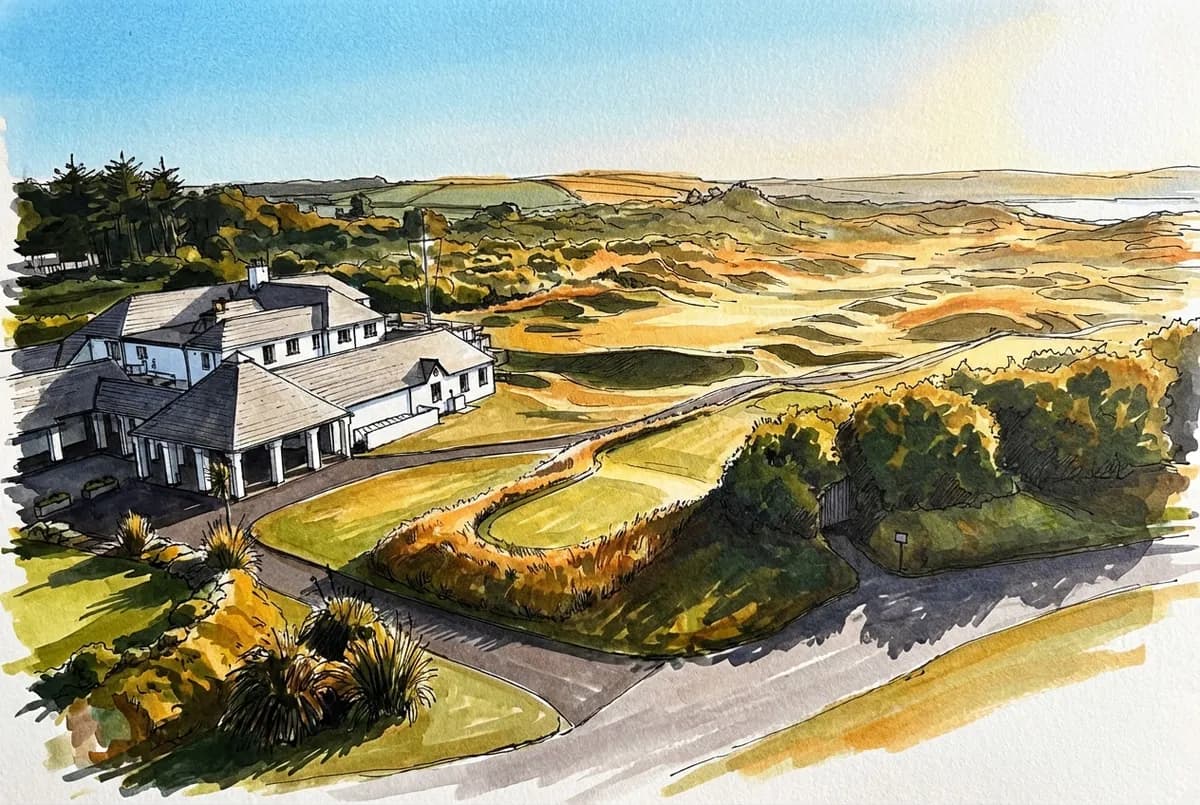
Overview: At St Enodoc Golf Club (Church), the links profile for St Enodoc Golf Club (Church) is listed at 6557 yards and par 69. James Braid's design runs through towering dunes beside the Camel Estuary and Daymer Bay, using steep changes of elevation, natural hollows and firm running ground to make the approach to each green as important as the tee shot. The course's identity is not simply coastal scenery: many holes change direction, reveal a new panorama and ask for a different response to the same wind. The directory's 6,557-yard figure matches the club's current blue-tee scorecard. The Church Course also sits beside the historic churchyard, whose presence makes the round feel unusually connected to the site's older human history.
History: Golf was played near St Enodoc church and Daymer Bay before the club was formed in 1890 after local golfers laid out holes among the dunes. James Braid created a full 18-hole course in 1907. He later returned to improve the layout, including the current 17th and 18th after the clubhouse moved in 1937. Further work by Peter McEvoy, new tees and the lengthening of the 16th have modernised the challenge, but the club says today's Church Course remains essentially Braid's design. The separate Holywell course developed on a different history and is not merged into this profile.
Did You Know? The giant bunker known as the Himalaya is one of St Enodoc's signature features, and the 16th now measures 560 yards after its 2007 extension. Former Poet Laureate Sir John Betjeman is buried in the churchyard beside the course, adding an unexpected literary connection to the links.
Add this course to your collection, document your round, and earn regional badges.
Rock