


Architect
Hugh Wilson
Established
1912
Par / Length
70 / 6996y
Access
Private
Green Fee
Private
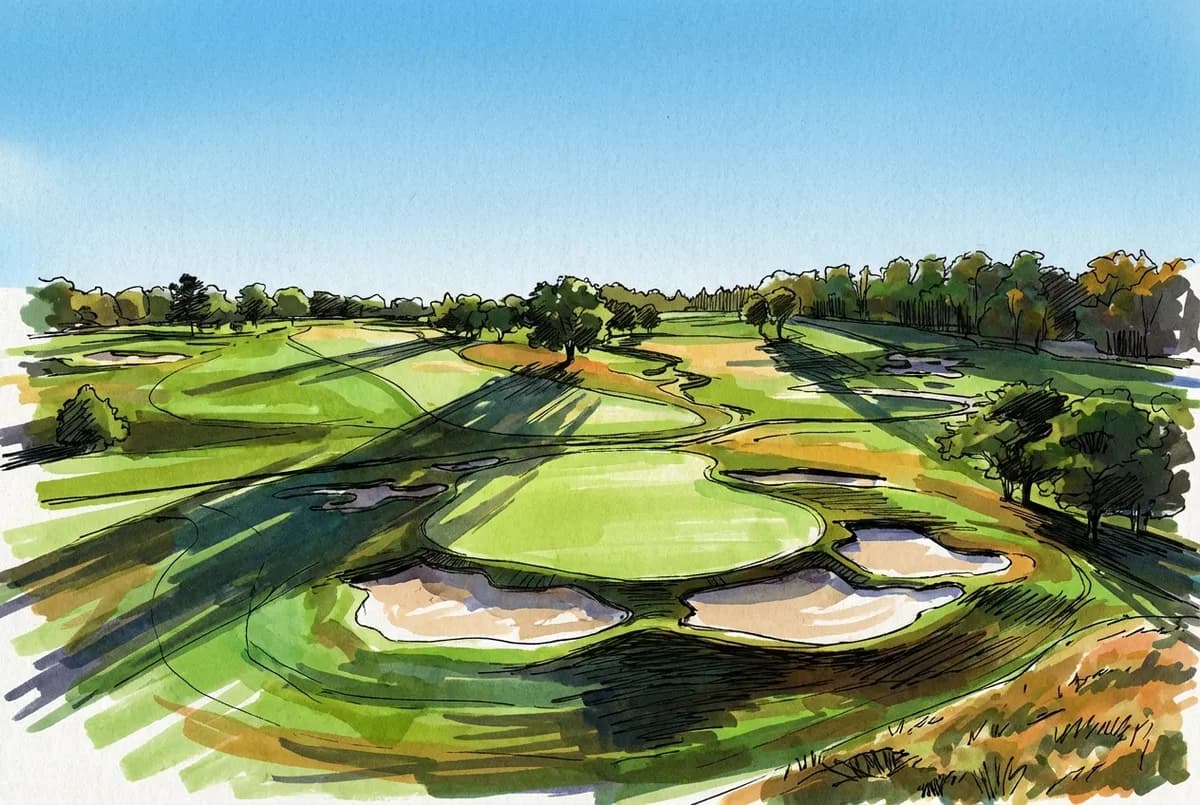
Overview: Merion Golf Club’s East Course is a testament to the idea that greatness in golf architecture is not dependent on length. Located on a remarkably small and irregular piece of land in Ardmore, Pennsylvania, Hugh Wilson’s masterpiece is a "thinking man’s" course that uses every inch of the property to challenge the player’s strategy and shot-making. The layout is divided into three distinct phases: the opening holes which provide some scoring opportunities, the middle stretch which winds through dense woodland and ravines, and the grueling finishing holes which are among the most difficult in championship golf. With its iconic wicker basket flagsticks and its deep, jagged bunkers, Merion is a place of immense charm and uncompromising competitive rigor.
History: The East Course was designed by Hugh Wilson, an amateur golfer who was sent to Europe by the club to study the great links before embarking on the project. Opened in 1912, it has since become one of the most storied venues in the game. Merion was the site where Bobby Jones completed the Grand Slam in 1930, winning the U.S. Amateur to secure his fourth major of the year. It is also where Ben Hogan hit his legendary 1-iron to the 18th green to force a playoff in the 1950 U.S. Open, just months after a near-fatal car accident. These moments have cemented Merion’s status as a hallowed ground of American sport.
Did You Know? Merion is famous for using red wicker baskets instead of traditional flags on its flagsticks. The origin of this tradition remains a mystery, though the most popular theory is that Hugh Wilson saw shepherds in Scotland using baskets to keep their lunches safe from the wind and animals, and he adopted the idea to prevent players from gauging the wind direction by watching a flag.
Add this course to your collection, document your round, and earn regional badges.
450 Ardmore Avenue


