Architect
Julien Chantepie (original); Tom Simpson; Fred Hawtree
Established
1909
Par / Length
72 / 6605y
Access
Private
Green Fee
Private
Overview: Fontainebleau Golf Club is an 18-hole heathland course set inside the Forest of Fontainebleau, on former imperial hunting ground a short distance from the town. The layout moves through a mix of pines, birches, beeches, cherries and old oaks, with narrow fairways framed by heather, broom, fern and lilac. Sandy soil keeps the course playable in changing weather and gives the ball a firm, running response, while the bunkers and woodland edges punish careless positioning. The course is par 72 and its interest is built from variety rather than spectacle: a drive can be shaped by a tree line, an approach may need to clear rock and heather, and a green's slopes can make the correct side more important than simply finding the surface. It is a traditional forest course with a distinctly strategic rhythm.
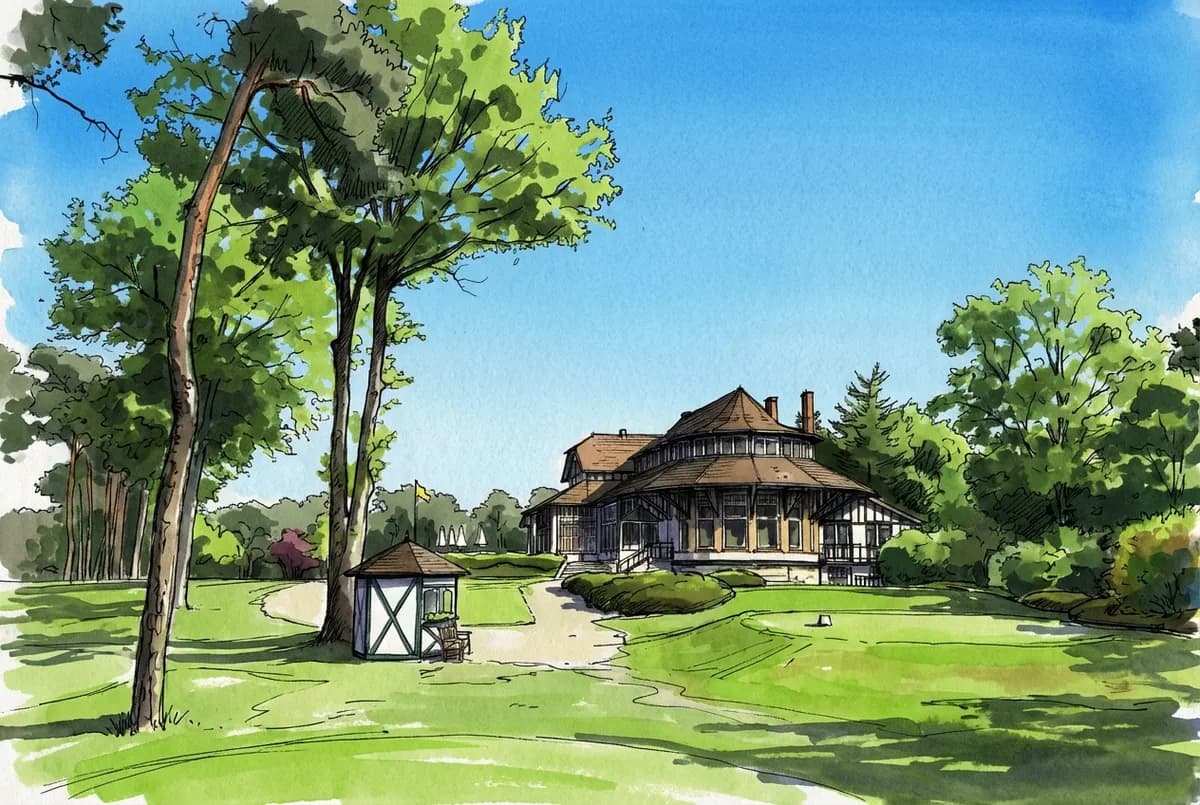
History: Fontainebleau was inaugurated in 1909 and was originally laid out by the French architect Julien Chantepie. Tom Simpson redesigned the course in 1920, and Fred Hawtree lengthened and modified it in 1963. The club's history places the course 800 metres from Fontainebleau on the former imperial hunting grounds and records the continuing importance of its sandy soil and woodland setting. The Norman-style clubhouse adds another layer of local character, with three frescoes by the Barbizon painter Paul Tavernier. The course has remained a private club while retaining a strong place in French golf history.
Did You Know? Fontainebleau's official history counts 103 fine-sand bunkers, but the course is defended by more than sand alone. Heather, broom, fern, lilac and dense coppice can all turn a slightly misplaced shot into a recovery, while the tree palette changes the color and feel of the course through the seasons.
Add this course to your collection, document your round, and earn regional badges.
Route d'Orleans